
Advance Auto Parts
Advance Auto Parts, Inc.Auto & Vehicles
4.79.09K Reviews
- Version
- 5.8.1
- Installs
- 1.00M
- Age Rating
- Everyone
Screenshots
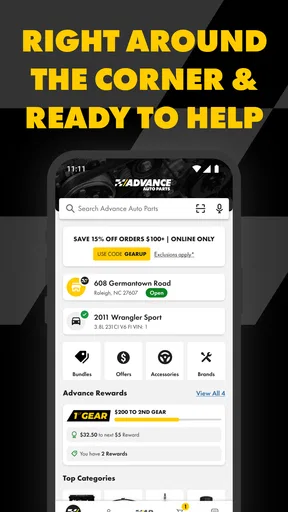
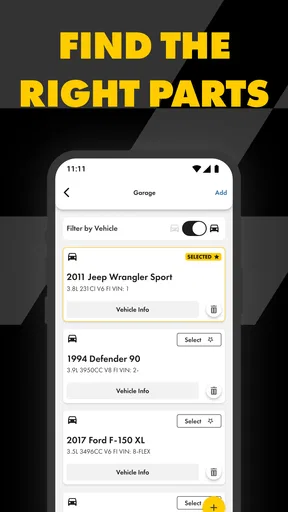
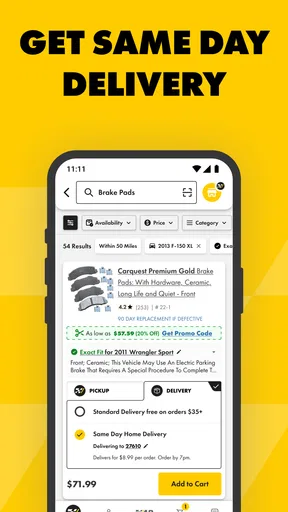
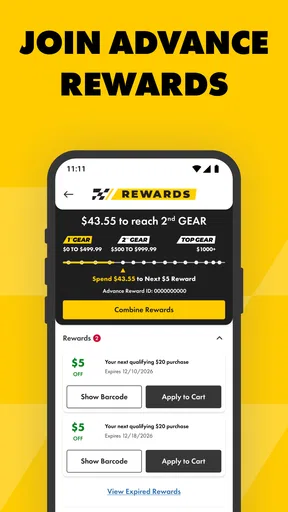
Our Review of Advance Auto Parts
 Analysis by Appyee
When I first opened Advance Auto Parts, I expected a straightforward shopping tool, but its usefulness became clearer when I treated it as part of a regular car-maintenance routine rather than a one-time parts search. It is a free Auto & Vehicles app from Advance Auto Parts, Inc., aimed at people who maintain cars, trucks, and SUVs themselves or simply want a more organized way to prepare for repairs. My first impression was practical: it is less about browsing for entertainment and more about reducing the small decisions that make vehicle work feel unnecessarily complicated.
The app is available for Everyone and supports devices running Android 8.0 or later. Its current version is 5.6.1, and it has built a sizeable audience, with over a million installs, a 4.7 average from around 76 thousand ratings, and approximately 8.8 thousand written reviews. Those figures suggest that it has become a familiar companion for many drivers, but popularity alone does not determine whether an app deserves permanent space on my phone. The more important question is whether it continues to help after the first urgent purchase is finished.
Useful from the first repair or parts search
The strongest early appeal is the way the app brings several vehicle-related tasks into one place. Instead of switching between a general search engine, a parts retailer, and separate repair videos, I can begin with the vehicle problem and use the app as a starting point for finding relevant parts, DIY tools, and repair help. That does not replace a proper diagnosis, but it gives the process a more deliberate shape.
I found this especially useful when thinking through a repair before visiting a store. A vague plan such as “I need something for the brakes” is not enough to make a reliable purchase. The vehicle, the exact component, and the job itself all matter. Using a dedicated auto-parts app encourages me to slow down, identify what I am actually replacing, and check whether I need supporting items or tools. That preparation is more valuable than simply finding the cheapest-looking result.
A realistic everyday scenario is a warning light appearing before a work commute. I might not be ready to perform a full repair that evening, but I can use the app to investigate the likely maintenance area, look for the needed part, and decide whether the job is within my ability. If I already know the vehicle and the repair, the app can shorten the gap between recognizing the problem and gathering what I need. If I do not know the cause, its repair-oriented material is more helpful as a guide for the next question than as a final diagnosis.
That distinction matters. An app can help me organize a repair, but it cannot inspect a worn belt, hear a failing bearing, or confirm that a warning light has one specific cause. I would not use any catalog result as permission to install a part blindly. The best first-week workflow is to identify the vehicle carefully, read the available guidance, compare the part details, and then verify the choice against the vehicle manual or a trusted professional source.
Why the first week feels efficient
The combination of parts browsing and repair help gives the app a practical advantage over a normal shopping app. A general retailer may show products, but it usually does not frame the purchase around the job I am trying to complete. A video platform may show repair demonstrations, but it does not naturally connect that information to the parts and tools I need to obtain. Here, the shopping decision and the maintenance decision sit closer together.
One useful habit is to plan the entire job before placing an order or making a store trip. I can think about consumables, hand tools, replacement hardware, and cleanup rather than discovering halfway through the repair that one small item is missing. This is a non-obvious benefit because the app is not merely helping me locate a component; it can change how I prepare. For weekend work, that preparation may save more time than the search itself.
Another helpful approach is to use the repair information to decide whether the job is suitable for a beginner. Some maintenance tasks are manageable with patience and the right tools, while others involve safety-critical systems or require specialized equipment. The app can help me understand the outline of a task, but I still need to judge my own experience honestly. If the instructions seem unclear or the repair involves a serious risk, a mechanic is the better option.
The first-week experience is therefore strongest for a driver who has a specific maintenance question. Someone who opens it without a vehicle need may find less reason to return immediately. This is not an app I would browse every day for amusement. Its value appears when a part needs replacing, a tool is missing, or I want to turn a vague maintenance concern into a more organized plan.
What keeps it useful month after month
Long-term value comes from repeated maintenance moments rather than constant engagement. Cars create a steady stream of small decisions: replacing worn consumables, preparing for seasonal driving, checking an unfamiliar symptom, or collecting supplies before a planned service. An app focused on car, truck, and SUV parts can earn a lasting place when it becomes the first stop for those decisions.
I think the recurring value is strongest for people who do at least some work themselves. A DIY owner may return whenever a repair is scheduled, using the app to look up a part and think through the required tools. A household with several vehicles may benefit even more because the app can serve as a common reference point instead of relying on scattered notes and searches. It is also useful for a driver who does not perform repairs but wants to understand what a service visit may involve before speaking with a professional.
There is a practical difference between using the app as a purchase shortcut and using it as a maintenance habit. The shortcut is occasional: find a part, complete the transaction, and forget the app. The habit is more valuable: check the repair guidance early, identify everything required, and use the information to avoid rushed decisions. I prefer the second approach because it makes the app part of planning rather than an emergency reaction.
For recurring maintenance, I would use it alongside a simple personal record of the vehicle’s work. The app can help with the current task, but it should not become the only place where I remember what was installed or when a service was completed. Keeping those notes separately makes future searches more accurate and helps prevent replacing the wrong item. This is one of the trade-offs of a retailer-centered tool: it is good at helping me act now, but my long-term vehicle history still needs its own system.
The app also has value before a road trip or a change in driving conditions. I can use it to review the maintenance items I may need to address, think about emergency supplies, and check whether an old tool kit is adequate. That does not turn the phone into a roadside mechanic, but it encourages preparation before a small issue becomes an expensive interruption. In my experience, this planning role is more durable than the excitement of installing a new app.
Where it beats the usual alternatives
Compared with a general online marketplace, the main advantage is focus. A broad marketplace may offer more unrelated sellers and products, but that variety can make automotive compatibility harder to judge. Advance Auto Parts is built around the vehicle-parts context, so the experience feels more relevant when I already know the maintenance job I am trying to complete.
Compared with a search engine, the app reduces the number of disconnected steps. A search engine is better for broad research, owner discussions, and unusual symptoms, while this app is more convenient when I want to move from a known repair need toward parts, tools, and expert-oriented help. I would use both, but for different stages of the same job.
Compared with a repair-only app or a video library, its strength is the connection between information and shopping. A video can show technique more vividly, especially for a complicated repair, but it may not help me assemble the correct shopping list. The app is better at preparation and sourcing; a specialist manual, service guide, or experienced mechanic may be better for detailed technical instruction.
This makes the app a particularly good fit for practical owners who want one automotive starting point without pretending that one source can answer every question. It is less compelling for someone who always takes a vehicle to a professional and never needs to research parts, tools, or repair steps. In that case, a general service-booking solution or the mechanic’s own communication channel may be more relevant.
The maintenance burden of keeping it worthwhile
The app itself is free, which removes the biggest barrier to trying it. Still, free installation does not mean zero effort. I have to enter or select the correct vehicle information, read product details carefully, and resist the temptation to treat a convenient search result as proof of compatibility. The maintenance burden is mostly attention rather than money.
Vehicle identification is the first place where care pays off. Cars can have different configurations, engines, trims, and production details, and a part that looks right may still be unsuitable. I would double-check the vehicle selection and compare the result with the owner’s manual, the part already removed, or a professional recommendation when the job is important. The app can narrow the search, but I remain responsible for confirming the final choice.
Repair guidance also needs sensible interpretation. I appreciate having expert help near the parts search, but written guidance cannot account for every condition in a driveway or garage. Rust, seized fasteners, previous repairs, missing tools, and unexpected damage can change a simple job quickly. I would read the instructions before buying anything, because discovering the difficulty after the purchase is one of the easiest ways to waste time.
Another maintenance issue is keeping expectations realistic about the app’s role. It is not a complete replacement for a vehicle manual, a diagnostic scanner, a torque reference, or professional inspection. If I use it as one layer in a broader process, it is useful. If I expect it to identify every fault and guarantee every fitment without checking, the convenience becomes a liability.
The Android requirement is modest enough for many users, but anyone using an older device should check compatibility before planning around the app. For supported users, the main ongoing task is simply keeping the app available and using it when a genuine maintenance need appears. I would not keep it installed because I feel obligated to open it; I would keep it installed because the next parts question is likely to arrive eventually.
Small frictions that become clearer over time
Retail-focused apps naturally guide me toward products, so I need to separate useful repair education from the shopping flow. That is not automatically a flaw, but it can make the experience feel less neutral than a manual or independent repair reference. When I am comparing options, I want to know which choice solves the vehicle problem, not merely which item is easiest to add to a basket.
Search precision is another area where patience matters. Automotive terminology can be confusing, and a casual phrase may lead to several related components. I get better results when I search from the repair task and vehicle details rather than using a broad symptom alone. For example, “strange noise” is a poor starting point, while identifying the system, the vehicle, and the suspected component creates a more useful path.
I also would not rely on the app alone during an urgent roadside situation. A phone may have a weak signal, the problem may be unsafe to inspect, or the required part may not be immediately available. The app is most effective before the crisis, when I have time to research and prepare. For emergencies, roadside assistance and professional help deserve priority.
Why some users may stop opening it
The biggest source of fatigue is irregular need. A driver whose vehicle is new, reliable, and professionally serviced may install the app for one purchase and then have no reason to return for months. That is not a failure of the product; it reflects the category. Automotive maintenance is important, but it is not a daily activity for most people.
Another source of fatigue is the gap between browsing and completing a repair. Finding a part can feel like progress, but the difficult work may still involve diagnosis, tools, safety procedures, and time. If I repeatedly open the app hoping it will remove all uncertainty, I may become disappointed. Its value is in organizing the job, not making every job simple.
People who prefer fully independent research may also find the retailer connection limiting. They may want a neutral comparison across many brands, detailed owner reports, or model-specific technical discussions. A broad automotive forum or repair database may be better for those questions. I would use this app for the practical parts-and-preparation stage and look elsewhere for unusual faults or long-term owner experience.
There is also a risk of overconfidence. A clear product page and repair explanation can make a task appear more approachable than it really is. I would be especially cautious with brakes, steering, suspension, electrical systems, and anything that could affect vehicle control. For those jobs, the app can support preparation, but competence, correct tools, and verification matter more than convenience.
My advice is to give the app a defined job instead of expecting it to become a general automotive companion automatically. Use it to prepare for a service, build a parts list, understand a repair outline, or check tool needs. If none of those situations applies, there is no reason to force regular use. That honest boundary helps preserve its usefulness instead of turning it into another rarely opened app.
Does it earn permanent space on my phone?
For me, the answer is yes, with a specific qualification: I see it as a maintenance utility, not a complete automotive authority. The free price makes it easy to keep available, and the combination of parts, DIY tools, and repair-oriented help gives it more lasting value than a basic catalog. Its 4.7 average and broad user base are consistent with an app that solves a practical need for many drivers, though my recommendation still depends on how much responsibility I take for vehicle care.
I would recommend it to DIY owners, people managing more than one vehicle, and drivers who like to understand a repair before buying parts or speaking with a mechanic. It is particularly worthwhile for someone who has recently started doing basic maintenance and wants a structured starting point. The app can help turn scattered preparation into a repeatable process: identify the vehicle, understand the task, gather the right items, and verify before installation.
I would be less enthusiastic for someone who never researches automotive work, has no interest in buying parts, or expects a diagnostic answer from a shopping app. A professional service relationship may be more useful in those cases. I would also choose a specialist technical source when I need deep model-specific procedures, unusual troubleshooting, or independent product comparison.
The lasting test is whether the app reduces friction during the next real maintenance task. In my experience, it does when I use it early and carefully. It saves the most effort when I plan the whole job, check fitment from more than one angle, and treat its repair help as guidance rather than a guarantee. That balance is what keeps it from becoming a novelty.
My final recommendation is to keep Advance Auto Parts installed if you expect to handle parts research or DIY maintenance during the year. It will not replace judgment, tools, manuals, or a trusted mechanic, but it can become a dependable first stop whenever a vehicle needs attention. For the right driver, that recurring convenience is enough to justify the space it occupies.
Privacy and Permissions
See what permissions an app requests and how it handles your data.
- Identity
- find accounts on the device
- Contacts
- find accounts on the device
- Location
- approximate location (network-based), precise location (GPS and network-based)
- Phone
- read phone status and identity
- Photos/Media/Files
- read the contents of your USB storage, modify or delete the contents of your USB storage
- Storage
- read the contents of your USB storage, modify or delete the contents of your USB storage
- Camera
- take pictures and videos
- Wi-Fi connection information
- view Wi-Fi connections
- Device ID & call information
- read phone status and identity
- Other
- view network connections, expand/collapse status bar, full network access, run at startup, prevent device from sleeping, Google Play license check, read Google service configuration
Verdict
Strengths of Advance Auto Parts
- Easy access to nearby stores, hours, directions, and contact details.
- Vehicle fitment tools help identify compatible parts for your car.
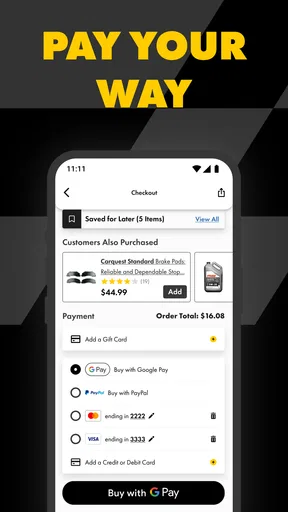
- Order pickup options can save time compared with shopping in-store.
- Digital receipts make it easier to track purchases and returns.
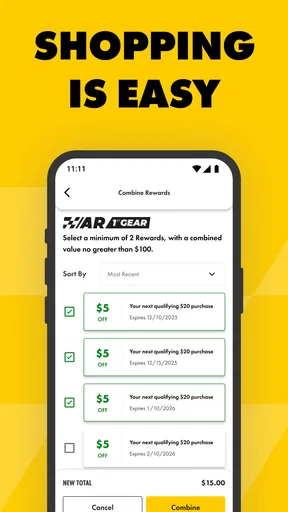
- Rewards features may provide discounts and benefits for regular shoppers.
Limitations of Advance Auto Parts
- Part availability can vary significantly by store and update slowly.
- Some vehicle-fitment results may require checking the product details carefully.
- App performance may depend on location services and a stable connection.
- Delivery fees and order minimums can reduce the value of small purchases.
- Account creation may be required to access some ordering and rewards features.
Similar Picks in This Category
View All
Android Auto
Google LLC4.1

maxim — order a taxi & food
PT. SITO4.7

Штрафы ГИБДД: проверка с фото
Pays LLC – Штрафы ГИБДД4.7

Номерограм – проверка авто
Авто Ассист4.8

Дром Авто
Дром4.9

Frequently Asked Questions
What is the Advance Auto Parts app used for?
The Advance Auto Parts app is designed to help customers shop for automotive parts, accessories, tools, fluids, and maintenance products from a mobile device. You can search by vehicle, browse product categories, check availability at nearby stores, view product information, and place orders for delivery or store pickup, depending on your location and the item selected.
Can I use the app to find parts that fit my vehicle?
Yes. One of the most useful features is the vehicle-selection tool, which lets you save details such as the year, make, model, engine, and sometimes trim of your car. After selecting a vehicle, compatible products are easier to identify while browsing. However, fitment information should still be checked carefully, especially for specialized parts or vehicles with multiple configurations.
Does Advance Auto Parts offer store pickup through the app?
In many areas, the app allows you to order eligible products online and select pickup at a nearby Advance Auto Parts store. Availability, preparation time, and pickup options can vary by location, inventory, and product type. Before traveling to the store, review the order confirmation and wait for notification that your order is ready for collection.
Can I return products or manage an order in the app?
The app can help you review order details and access information related to purchases, but return procedures may depend on how the order was placed, the product category, and the applicable store policy. Some items may have specific restrictions, while opened, installed, electrical, or special-order products may require additional review. Always check the current return terms before buying.
Is the Advance Auto Parts app free to download and use?
Yes, downloading and using the Advance Auto Parts app is generally free. You do not normally pay a separate fee simply to browse products, search for parts, or compare store availability. Costs apply to the products, taxes, delivery charges, or other order-related services. The app may also require an account for certain features, such as order tracking or saved vehicles.
